Blog
Life at Omnea
Why I'm launching a fund for the people building Omnea with me
・ 3
min read

Ben Freeman
CEO & Founder
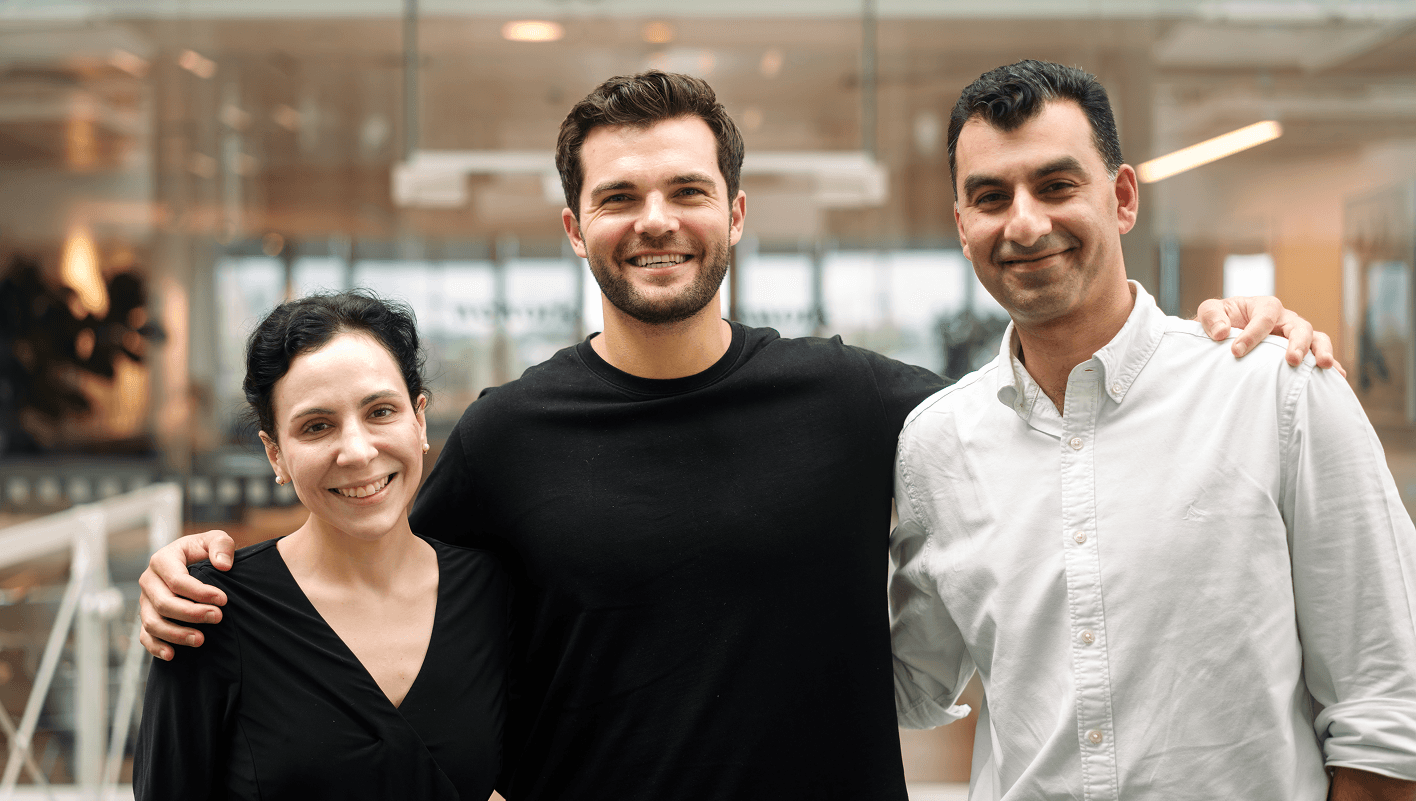
When I left Tessian to start Omnea, the leap was harder than it should have been.
I had to figure out where to start and what order to do everything — leaving Tessian, building a pitch deck, meeting venture capitalists, iterating on my ideas, and so on. And this was despite having great relationships with the early Tessian team, almost all of whom would go on to back me as angel investors. I just didn't know that at the time.
I doubt I was the only one — Piotr Dabkowski (ElevenLabs), Harry Wetherald (Maze), Andy Smith (Tracebit), and James Evans (Platformed) all left Tessian to found their businesses and had to figure it out from scratch.
What struck me is that the people you most want advice from when you're starting something new are the ones you've just spent years working with — whether that's your team, your boss, or even the board members and investors who you know could help you so much. Many of these people have seen your work, know how you think, and are rooting for you. But there's a strange taboo about telling your colleagues that you want to leave to build something. Let alone your CEO, board members, or company investors. So you don't — and you go and find strangers to convince instead.
I've thought for years that the right kind of company should build a proper pathway for this. Today, I'm doing it at Omnea with the launch of our Future Founders Fund.
What the Omnea Future Founders Fund is
We're launching a pre-seed fund and program that exists exclusively to back Omnea employees who decide they want to start their own companies. Any Omnean who has spent five years building Omnea is eligible. The mechanics are deliberately simple:
One 30-minute pitch meeting,
$250,000 of capital committed within 24 hours,
Three months of office space, and
Direct support from me, our board, our investors, and a network of 150+ operators, including people like Matt Robinson, Tim Sadler, and Claire Hughes Johnson.
We've partnered with Pietro Invernizzi at Firedrop (one of the best pre-seed funds in Europe) to provide the infrastructure and full-time management, and every member of Omnea's board — Sonali De Rycker (Accel), Jai Sajnani (Khosla), Rebecca Lui-Doyle (Insight), and Ricardo Sequera (Point Nine)— has invested in the fund personally. They are choosing to back not just Omnea, but the companies Omneans will go on to build in the future.
Why this works for Omnea specifically
The reason this makes sense for us, more than most companies, is our relentless focus on talent density.
We interviewed over 10,000 people for the first 50 hires at Omnea, and we still interview with the same rigour and intensity as we did back then. Omnea is a difficult place to land a role, and that is intentional.
Today, we're over 200 people across London and New York, and over 10% of the team have previously founded their own companies, many of them venture-backed. This includes incredible people like Ben Champion, former founder-COO at Accel-backed Fygo, Arie Barendrecht, former founder-CEO at Bessemer-backed WiredScore, and Chris Mansfield, former founder-CEO at YC-backed GoodCourse. So it’s not hard to believe some Omneans will go on to start businesses of their own.
The traits we hire for — grit, agency, ambition, the ability to think from first principles — are the same traits venture capitalists look for in founders.
If we have tens of people at Omnea who could plausibly go on to build great companies one day, I want to support them in doing that.
McKinsey worked this logic out a long time ago: invest in your alumni, build a network for life, and it all compounds. While we’re not expecting our alumni to necessarily become Omnea customers (which is the McKinsey model), it is still true that the system compounds. It will also help us attract the most ambitious and talented people in the market. People can join Omnea knowing they will learn first-hand how to build a company and that we are taking a long-term approach to their development and will back them even beyond their time at Omnea.
Why now
I’ve been asked whether it's too early in Omnea's life to be thinking about this. I don't think so.
There are people building Omnea with me right now who already know they want to build a business of their own one day. For many, that’s why they joined an early-stage company in the first place. I'd rather they plan their next chapter knowing what's available, and I'd rather they tell me about it openly, instead of going through the awkwardness and difficulty of figuring it all out alone.
This fund isn't designed to push people out, and I don’t think it will. Entrepreneurial people don't tend to get talked out of building things. The point is to acknowledge that some Omneans will, inevitably, become founders, and to make that step less lonely than mine was.
What I'm hoping for
I think multiple generational businesses will come out of the Omnea team in the next decade, with Omnea being only one of them. The others will be founded by people I've worked alongside and pushed hard with. I want to be there when they take the leap and know that I’ll look back proudly on doing so in decades to come.
If we can play even a small role in launching the next wave of great companies—while making Omnea one of them—that's a far better legacy than anything any single company could build on its own.
— Ben


" height="10.661279999999998px" id="LoeK6pYtS" transform="translate(0.27 5.262)" width="3.3432189999999995px"/><path d="M 7.025 0.035 C 6.902 0.019 6.771 0.012 6.64 0.004 C 4.768 -0.073 3.713 1.036 3.343 1.514 C 3.243 1.645 3.197 1.722 3.197 1.722 L 3.197 0.297 L 0 0.297 L 0 10.958 L 3.197 10.958 L 3.343 10.958 C 3.343 9.872 3.343 8.793 3.343 7.707 C 3.343 7.122 3.343 6.536 3.343 5.951 C 3.343 5.227 3.289 4.456 3.651 3.794 C 3.959 3.239 4.514 2.962 5.138 2.962 C 6.987 2.962 7.025 4.633 7.025 4.788 C 7.025 4.795 7.025 4.803 7.025 4.803 L 7.025 11.004 L 10.369 11.004 L 10.369 4.048 C 10.369 1.668 9.159 0.266 7.025 0.035 Z" fill="rgb(115, 112, 108)" height="11.004105999786248px" id="I8ZK_lI2U" transform="translate(5.631 4.996)" width="10.368549999999999px"/><path d="M 1.941 3.882 C 3.013 3.882 3.882 3.013 3.882 1.941 C 3.882 0.869 3.013 0 1.941 0 C 0.869 0 0 0.869 0 1.941 C 0 3.013 0.869 3.882 1.941 3.882 Z" fill="rgb(115, 112, 108)" height="3.8824500000000315px" id="BoA0OppHn" width="3.882450000000003px"/></g></svg>)
" height="12px" id="Gnx304Rz4" transform="translate(0 2.5)" width="16px"/></svg>)