Blog
From the army to PayPal CPO: Kristina Adent | Omnea Spotlight
・ 15
min read

Michael van Keulen
CPO-in-residence
When Kristina Adent landed her first civilian job, she called her dad to tell him she was in procurement. He worked at Ford Motor Company, and his reply was short: "Oh, those guys buy my pens."
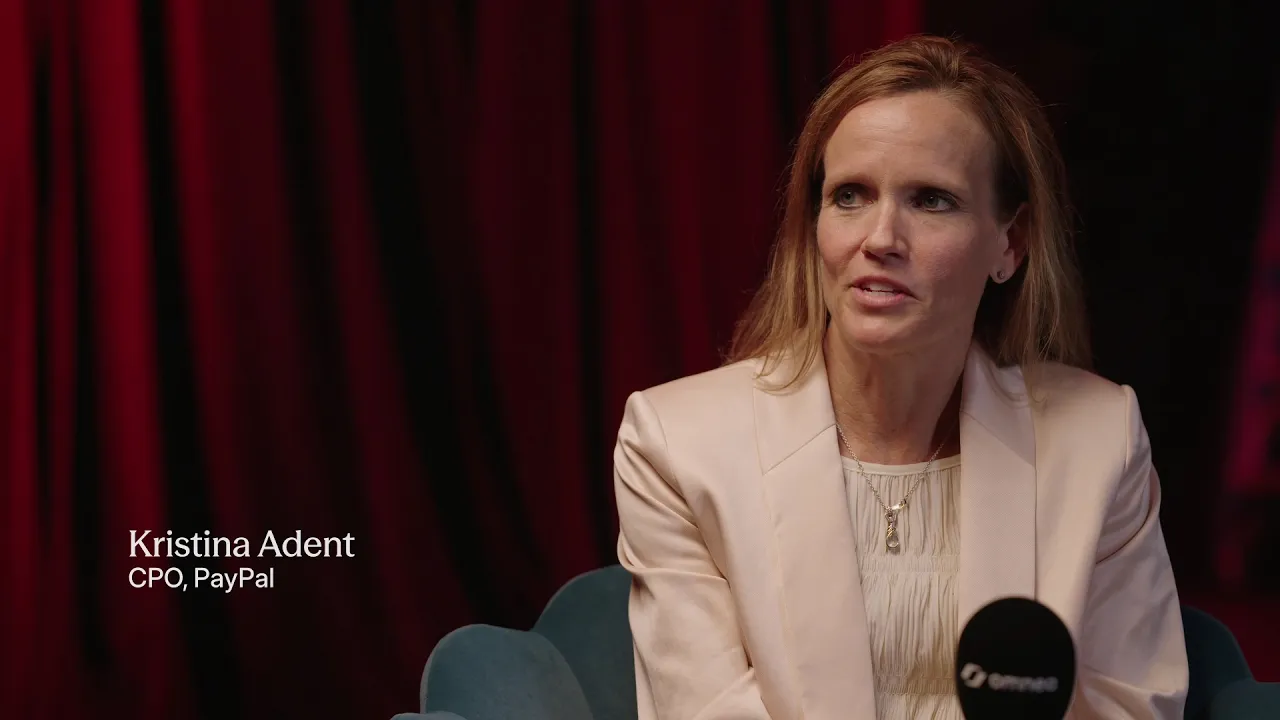
About 25 years later, Kristina is Chief Procurement Officer at PayPal, and her dad has long since changed his mind. In this episode of Omnea Spotlight, she explains how procurement grew from a back-office buying function into a strategic one, why PayPal added an orchestration layer on top of eight existing systems, and where AI helps procurement teams most.
Meet Kristina
Kristina has spent her whole career in sourcing and procurement, the last decade of it in San Francisco's tech industry. She started out in the army, which she credits with teaching her leadership and a "mission first" attitude: whatever obstacles appear, the mission still gets done.
When she left, her first civilian interview was at Procter & Gamble, which offered her a role in either marketing or procurement. She picked procurement and hasn't regretted it.
What we discussed
How procurement moved from firefighting to the boardroom
When Kristina started at P&G, her onboarding was a binder of paper: price lists, spreadsheets and contracts. Many business leaders didn't yet know what sourcing was. Over her career, sourcing spread into new categories such as legal and medical spend, and at PayPal it now covers payments, with all the AI and regulatory challenges that brings.
She's candid that procurement had to earn its place. For years the function was trained to react and fight fires. That changed once procurement set boundaries, refused to let deals move forward without a proper process, and built structure around how the company buys. Value then started to appear in places nobody expected.
Data is procurement's most undervalued lever
Procurement sees how the whole company behaves, from what each leader spends to how much risk they're comfortable with. Kristina argues that very few functions have that much information to hand, and the opportunity is to share it with leadership and let it guide what happens next.
The engagement model she's seen work best gives every business unit leader a dedicated sourcing partner. That partner agrees with the leader how they'll work together, then takes each finalised deal to approval alongside them.
Why PayPal chose an orchestration layer
When Kristina joined PayPal, her team was already asking for an orchestration layer. She held off. A deal already passed through eight different systems from start to finish, and adding another felt like the wrong answer. The team reviewed each system one by one, found they needed all of them, and concluded they needed either more people or better technology.
Omnea fitted because it doesn't need to pull in a system of record. Each of PayPal's tools keeps doing the job it was bought for, while Omnea sits on top, moving requests along and cleaning them up as they go. Kristina names two reasons for the final decision: the team's first impression of the product and its AI, and the Omnea team's commitment to improving PayPal's process during implementation.
AI works best with procurement expertise behind it
Every vendor PayPal looked at had AI. The difference was where it sat. Most used it at a few checkpoints, such as the start, the contract phase and a final check. In Omnea, AI runs through the whole process and stops a request as soon as something's wrong, so errors get fixed before they travel any further.
What has surprised Kristina most is that AI checks the logic behind a deal as well as its data. That makes experienced procurement people even more important, because getting the most from AI takes someone who understands sourcing end to end and can add the detail AI doesn't know it needs.




" height="10.661279999999998px" id="LoeK6pYtS" transform="translate(0.27 5.262)" width="3.3432189999999995px"/><path d="M 7.025 0.035 C 6.902 0.019 6.771 0.012 6.64 0.004 C 4.768 -0.073 3.713 1.036 3.343 1.514 C 3.243 1.645 3.197 1.722 3.197 1.722 L 3.197 0.297 L 0 0.297 L 0 10.958 L 3.197 10.958 L 3.343 10.958 C 3.343 9.872 3.343 8.793 3.343 7.707 C 3.343 7.122 3.343 6.536 3.343 5.951 C 3.343 5.227 3.289 4.456 3.651 3.794 C 3.959 3.239 4.514 2.962 5.138 2.962 C 6.987 2.962 7.025 4.633 7.025 4.788 C 7.025 4.795 7.025 4.803 7.025 4.803 L 7.025 11.004 L 10.369 11.004 L 10.369 4.048 C 10.369 1.668 9.159 0.266 7.025 0.035 Z" fill="rgb(115, 112, 108)" height="11.004105999786248px" id="I8ZK_lI2U" transform="translate(5.631 4.996)" width="10.368549999999999px"/><path d="M 1.941 3.882 C 3.013 3.882 3.882 3.013 3.882 1.941 C 3.882 0.869 3.013 0 1.941 0 C 0.869 0 0 0.869 0 1.941 C 0 3.013 0.869 3.882 1.941 3.882 Z" fill="rgb(115, 112, 108)" height="3.8824500000000315px" id="BoA0OppHn" width="3.882450000000003px"/></g></svg>)
" height="12px" id="Gnx304Rz4" transform="translate(0 2.5)" width="16px"/></svg>)