Blog
Product Updates
Introducing the Agentic Operating System for procurement
・ 10
min read

Ben Freeman
CEO & Founder
Today we're introducing the Agentic Operating System (aOS) for procurement: an intelligent system that gives people and agents one place to manage suppliers. It's built on a Context Engine, with a library of agents running on top and your controls around both.
Context Engine. The backbone of the aOS. Data from intake, approvals, rejections, policies and other internal and external sources is structured here, so every agent works from what your organisation has already decided, and improves with every cycle.
Agent Library. A pre-configured set of agents across intake, sourcing, contracting, TPRM and supplier management. Each agent intelligently selects the right AI model for the task.
Governance. Agents run autonomously with a configurable level of human oversight, a full audit trail, and a rationale for every action that you can trace back to source data.
01 — The problem
Legacy P2P is dying. So is orchestration.
Since the early 2000s, enterprises have been using a static architecture for procurement, built around heavy, rigid systems of record. The UX of these systems has barely changed since then, and that experience has shaped procurement's somewhat unglamorous reputation: a function to be bypassed if possible, a blocker, a bottleneck.
Within the last few years, a new breed of tools has emerged: intake and orchestration platforms, making things faster but not necessarily smarter. And they've increasingly morphed into the same bloated systems that they claimed to disrupt: a shinier P2P that never solved the underlying data structure. It was still a 'rigid system' underneath, albeit one that moved a little faster than it previously did, and drove slightly more engagement from internal stakeholders.
Some of these platforms were launched as little as four years ago, and already feel like legacy technology: overhyped, bloated, and ultimately insufficient for the complex reality of enterprise procurement.
"CPOs managing billions in spend often default to P2P. I took a different view: give me the building blocks, let me compose the right workflow for where we are today and reshape it as we grow. That flexibility is where the real savings come from."
Kai Nowosel, CPO, Adecco & former CPO, Accenture.
So what comes after P2P? The next wave of tech will need to provide flexibility, deep orchestration and intelligent AI model selection, freeing procurement from its rigid reputation, while still maintaining deep controls on governance and risk. An intelligent architecture for procurement, TPRM and supplier management.
The new operating system for procurement will need to build context, understand and improve itself - not just automate busywork with bots.
Will it be agentic and AI-native? Yes, absolutely. But probably not in the way most people imagine: a chatbot you ask questions, or a swarm of agents running the function unsupervised. In the procurement space, AI-washing won't cut it. Agents without sufficient context will ultimately fail.
In order to succeed legacy P2P, the new operating system for procurement will need to build context, understand and improve itself, not just automate busywork with bots. This requires structured data from every system a purchase touches: ERP, CLM, GRC, TPRM and legacy P2P itself. And it requires a system that improves its own policies with every approval, rejection and negotiation.

02 — WHAT CHANGED
Meet the agents
Omnea's agents are built on leading AI models, and each one selects the model that suits its task. What makes them different is what they know about how your organisation actually buys.
The aOS ships with a library of agents, deployed inside the workflows your team runs. But these aren't simple bots. First, Omnea agents produce structured output, tied to a specific request, that materially advances the process: a draft request ready for submission, a decision-grade escalation, a routed contract. Second, agents can become true specialists at their jobs, and self-improve as they go. For example, the Intake Review Agent learns from real amendment data and edits itself to catch more errors and inconsistencies.
Omnea's agents return finished work, a drafted and routed request, or an escalation ready for a decision, and they get better the more your team uses them.
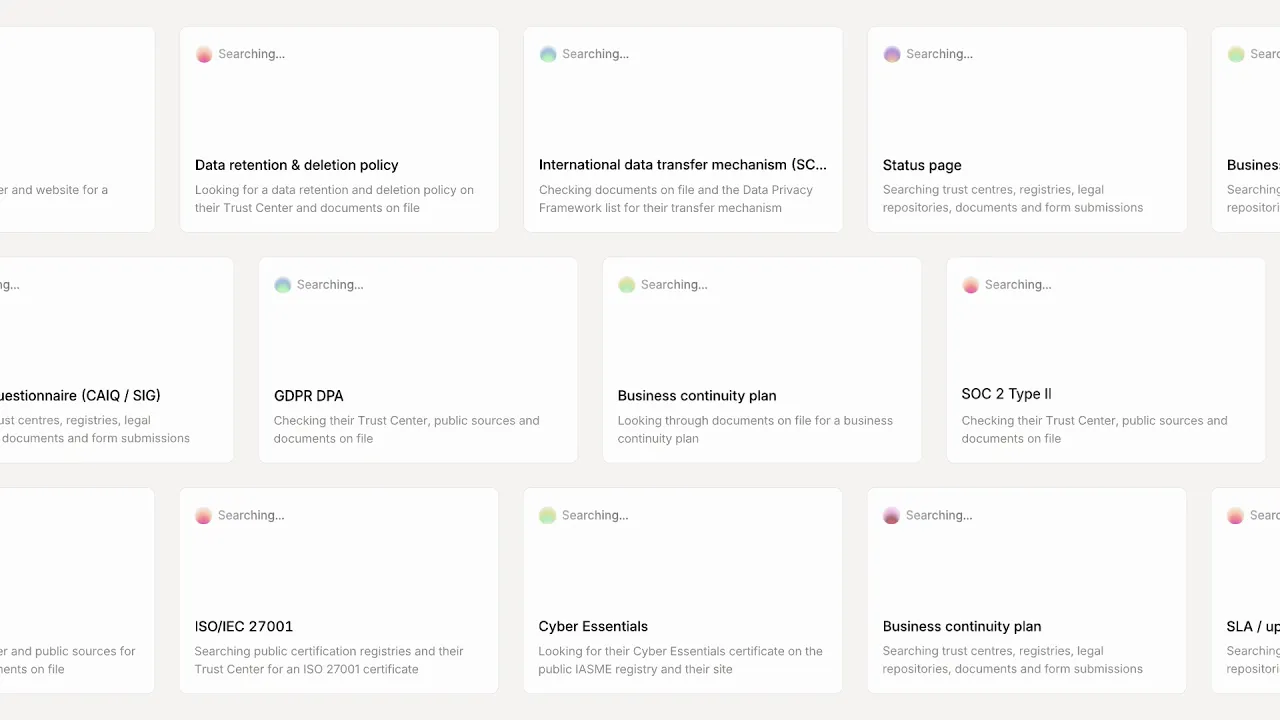
Meet the Artefact Agent.
From today, Omnea customers can start using a roster of curated agents. They're ready to review and improve new intake requests, suggest and potentially execute improvements to your workflows, benchmark pricing from Tropic, query Dow Jones about supplier exposure, escalate third party risks, and prepare your team for upcoming renewal negotiations.

The Omnea agent library, spanning the full P2P process.
03 — BEYOND BUSYWORK
The dream workplace for people and agents
With a legacy P2P plus a simple agentic orchestration tool, your team will stay trapped in the busywork cycle: perhaps not processing everything manually, but intensively babysitting lightweight agents that don't have the necessary context to do their tasks properly. That's no-one's ideal workplace; it's agentic preschool.
"Omnea's AI capabilities replace fragmented systems, endless email threads, and manual spreadsheets. This creates a single source of truth for every request, review, and risk check, while also getting rid of the manual busywork that slows procurement teams and the rest of the business down."
Ben Kung, VP FP&A, Data & Ops, Spotify.
With Omnea's aOS, agents don't confidently tackle vague tasks with missing context. They work from a rich, structured basis of all available data, and come pre-built with industry knowledge that adapts rapidly to how you work.
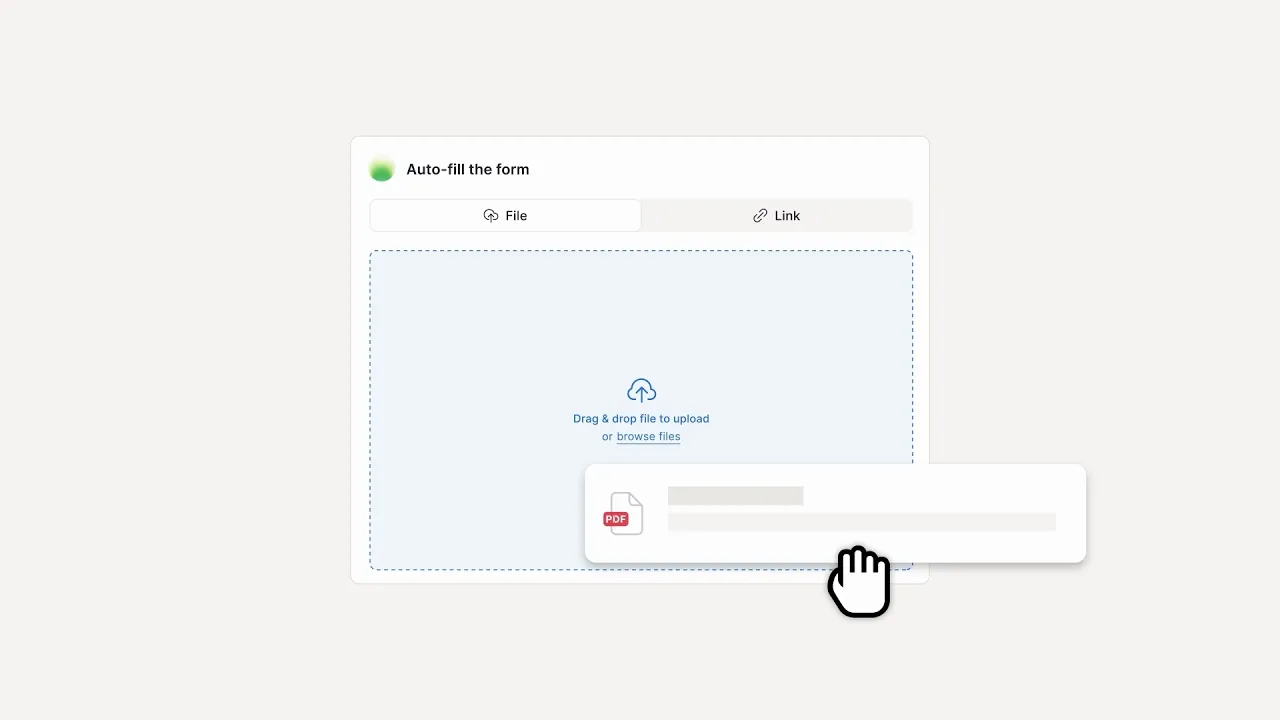
Meet the Intake Approval agent.
04 — RESULTS
The proof: Adyen’s transformation journey
The evolution described in this article spans a decade. Adyen experienced it in under three years.
Adyen processes more than $1 trillion in payment volume a year, running payments for Uber, Starbucks and Netflix. In February 2024 they built a procurement team and bought a source-to-pay tool, wiring it into the ERP for their 1,000 employees. Within a year it had hit the typical ceiling of all legacy P2Ps: the system was live but avoided, and hundreds of requests a month still had to be manually shepherded by a team of 21.
So they did what the market now recommends and decided to implement an orchestration layer on top of their P2P. They chose Omnea at the end of 2025 and went live 16 weeks later, covering almost 5,000 employees across 29 offices.
When the S2P renewal came, the incumbent raised its price on a shrinking contract. Adyen asked what it was still paying for, and the answer was: not enough. They let the contract lapse, moved the rest of their flow onto Omnea, and cut what they'd once considered vital infrastructure.
Average end-to-end cycle times in S2P infrastructure: 18-32 days
Average end-to-end cycle times in Omnea: 10-20 days
Estimated reduction in average cycle times across all workflows: 45%
"We set out to find a partner who could take us further on automation and embedded AI. We ended up removing the legacy system entirely and integrating Omnea directly with our ERP. Everything runs in Omnea now, and we're building agents the old system could never have supported. We can keep iterating on them to get increasingly better results over time." Gabriel Galdino, Procurement Team Lead, Adyen.
Adyen chose Omnea because they wanted a partner that could take them further on automation and embedded AI than a bolt-on layer ever could. They published a whitepaper on their transformation journey.
05 — CONTEXT ENGINE
Why aOS outcomes compound with context
Messy data is the starting condition for enterprise procurement, and making sense of it is exactly what the Context Engine is built to do. It starts with whatever exists, flags the gaps honestly, and structures everything that flows through it from day one.
“Omnea shone an uncomfortable light on how bad, incomplete and patchy my data was, and then very quickly gave me the tools to fix it.”
Graham Bettes, Procurement Director, Ocado.
The instinct is to say the Context Engine gives agents more context. It's the opposite. Load a model with everything you have and its judgment degrades, so the hard part is deciding what each agent doesn't need to see. The Context Engine's job is as much what it withholds as what it supplies. This is where the aOS for procurement is architecturally different to other agentic automation tools.

AI works best when it's built into the workflow people already use. As we know from legacy P2P systems, if people don't like the process, they ignore it. If they ignore it, the data is weak. If the data is weak, the AI never delivers on its promise.
TeamViewer is a good example: their employees liked the intake enough to bring procurement in earlier in the buying process, before terms were half-agreed with a supplier, giving the team room to negotiate. TeamViewer put four percentage points of EBIT, year on year, down to that one change.
Omnea runs the entire end-to-end workflow with consumer-grade UX to drive high adoption. As it goes, it builds a rich agreement-level record of what was requested, who approved it, what changed, and what the outcome was. Because people actually adopt the process, the data compounds; because the data compounds, the agentic outcomes do too.

Want the deeper technical story? Read the Context Engine deep-dive →
06 — GOVERNANCE
Leading AI models, fully under your control
While completely autonomous work may sound appealing, it begs an obvious question: if an agent can act on its own, what stops it acting wrongly? For a function where decisions carry financial, legal and compliance consequences, "we just trusted the model" is not an answer a CPO can bring to an auditor.
The aOS brings leading AI models inside the system where the controls already live, so your team never has to choose between moving fast and staying governed.
Right now, there are employees in your team who are outsourcing critical tasks in their workflow to a general-purpose LLM. While this might feel smart in the moment, it won't hold up at audit time. Without logging, controls, or governance in place, it's impossible to track where information or decisions came from.
Here's how that changes with the aOS:
Guardrails. Oversight you control. | You choose the level of autonomy for each agent and workflow, by category, value or data sensitivity: e.g., an agent can draft and route a low-risk renewal unattended, whereas high-value contracts always get flagged to your team for review. |
|---|---|
Explainability. A rationale for every action. | Agents do not act as a black box. Each decision and action taken by an agent comes with the rationale and the source data it drew from, so reviewers can see what happened and why. |
Auditability. A full audit trail. | Every action by a person or an agent is logged and connected to the request it belongs to, so six months later you can still reconstruct exactly how each decision was made. |
Model Selection. Leading AI models within your guardrails. | The aOS assesses the complexity of each task and selects a suitable AI model from a leading LLM for the job. With Omnea, every one of those models runs inside the same internal guardrails: your policies, your permissions, your approval thresholds. |
The aOS brings leading AI models inside the system where the controls already live, so your team never has to choose between moving fast and staying governed.
Ready to learn more? We'll show you how the aOS transforms procurement from intake to renewal, and drives better outcomes over time. Book a demo →


" height="10.661279999999998px" id="LoeK6pYtS" transform="translate(0.27 5.262)" width="3.3432189999999995px"/><path d="M 7.025 0.035 C 6.902 0.019 6.771 0.012 6.64 0.004 C 4.768 -0.073 3.713 1.036 3.343 1.514 C 3.243 1.645 3.197 1.722 3.197 1.722 L 3.197 0.297 L 0 0.297 L 0 10.958 L 3.197 10.958 L 3.343 10.958 C 3.343 9.872 3.343 8.793 3.343 7.707 C 3.343 7.122 3.343 6.536 3.343 5.951 C 3.343 5.227 3.289 4.456 3.651 3.794 C 3.959 3.239 4.514 2.962 5.138 2.962 C 6.987 2.962 7.025 4.633 7.025 4.788 C 7.025 4.795 7.025 4.803 7.025 4.803 L 7.025 11.004 L 10.369 11.004 L 10.369 4.048 C 10.369 1.668 9.159 0.266 7.025 0.035 Z" fill="rgb(115, 112, 108)" height="11.004105999786248px" id="I8ZK_lI2U" transform="translate(5.631 4.996)" width="10.368549999999999px"/><path d="M 1.941 3.882 C 3.013 3.882 3.882 3.013 3.882 1.941 C 3.882 0.869 3.013 0 1.941 0 C 0.869 0 0 0.869 0 1.941 C 0 3.013 0.869 3.882 1.941 3.882 Z" fill="rgb(115, 112, 108)" height="3.8824500000000315px" id="BoA0OppHn" width="3.882450000000003px"/></g></svg>)
" height="12px" id="Gnx304Rz4" transform="translate(0 2.5)" width="16px"/></svg>)