Blog
Industry Experts
Financial services roundtables: friction, risk, and iteration
・ 4
min read

Olivia Groom
Head of Procurement Transformation
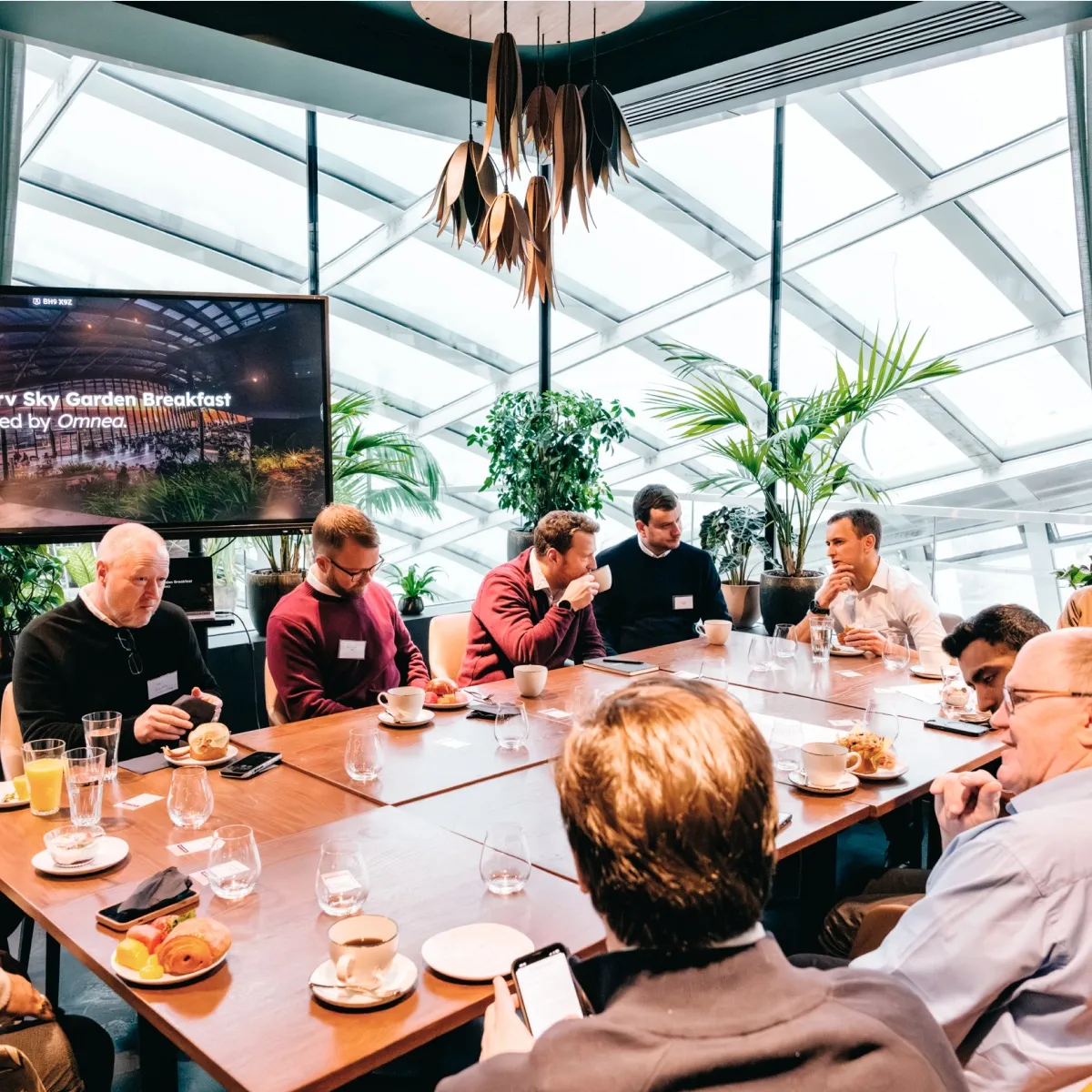
Last week, we brought together a group of Financial Services leaders for breakfast and a series of roundtables focused on one question that keeps coming up: how can procurement teams best use AI to balance governance and velocity?
Procurement plays an outsized role in Financial Services because it sits right at the intersection of risk, regulation, and operational efficiency. Every buying decision can carry third-party exposure, audit implications, and control requirements (yet the business still expects procurement to move quickly, unblock teams, and support transformation). That push and pull is only intensifying: regulation is forcing structural change, while AI is reshaping expectations around what systems should do and how fast workflows should run.
A huge thank you to Andy Fletcher (Monzo) and Marta Obrador (Novutech) for leading the roundtables, and to everyone who joined, shared openly, and contributed to such a thoughtful set of discussions. Across the tables, the conversation kept returning to a consistent set of themes. Here’s what we learned.
The core tension: friction, control and speed
Friction was the defining word of the morning. Leaders described the growing struggle to balance risk and control requirements with constant pressure for efficiency and speed. Many organisations have invested heavily in digitizing procurement and accelerating approvals, only to find themselves having to add friction back due to regulatory requirements.
A key takeaway was that governance is increasingly being embedded in system design, but many teams are still tackling the challenge with a process-first mindset, layering steps onto processes rather than redesigning workflows with embedded third-party risk management, so compliance feels natural.
Regulation and TPRM as pressure points
Regulatory change was consistently cited as the biggest driver of procurement operating model change. Teams are under pressure to demonstrate stronger controls, embed compliance earlier, and improve auditability and oversight.
But the way organisations respond matters: when regulation translates into extra process layers, it often increases friction rather than strengthening outcomes. Third-party risk management, especially during supplier onboarding and sourcing, came up repeatedly as a reminder that if procurement and risk aren’t involved early, it becomes far harder to move quickly later. Early involvement is critical if compliant outcomes are to be shaped proactively rather than enforced after the fact.
The underlying message: compliance needs to be built into the system experience from the first interaction—not tacked on as a checkpoint at the end.
From insight to action
Another repeated theme: many organisations feel data-rich but action-poor. Dashboards and reports make bottlenecks visible, but meaningful change is slow.
One reason is structural. Too often, systems are treated as static infrastructure rather than products that evolve over time. An operations mindset focuses on documenting, defining, signing off, and delaying. A product mindset focuses on testing, piloting, iterating, and measuring. The group shared a clear recognition that without active ownership and continuous iteration, insight rarely turns into better outcomes.
How can Omnea help?
Overall, the roundtables highlighted a sector under simultaneous pressure from tightening governance expectations and accelerating technology capability. Organisations can see the friction points clearly, but often lack the structural mechanisms to iterate.
That’s exactly the gap Omnea is built to close. Instead of adding more layers of process to meet regulatory expectations, Omnea embeds TPRM as early as intake, so risk and compliance are involved from the first interaction, not brought in once a supplier is already “chosen” and momentum is hard to stop. At Luno, this shift meant a >50% reduction in screening time. And because requirements for procurement in Financial Services is constantly in flux, Omnea combines:
AI-powered form insights to pinpoint where requesters get stuck (and where upstream friction creates downstream problems)
With a drag-and-drop workflow builder that lets teams adjust routing, approvals and controls instantly, without specialist resources or long change cycles.
Meaning procurement teams can keep iterating, and make compliant behaviour the easiest path, not the slowest. That’s why we’re trusted by financial services businesses like Moelis, Monzo, bunq, Pleo, Hargreaves Lansdown, and Tide. If you’d like to learn more, or see Omnea in action, please get in touch.





" height="10.661279999999998px" id="LoeK6pYtS" transform="translate(0.27 5.262)" width="3.3432189999999995px"/><path d="M 7.025 0.035 C 6.902 0.019 6.771 0.012 6.64 0.004 C 4.768 -0.073 3.713 1.036 3.343 1.514 C 3.243 1.645 3.197 1.722 3.197 1.722 L 3.197 0.297 L 0 0.297 L 0 10.958 L 3.197 10.958 L 3.343 10.958 C 3.343 9.872 3.343 8.793 3.343 7.707 C 3.343 7.122 3.343 6.536 3.343 5.951 C 3.343 5.227 3.289 4.456 3.651 3.794 C 3.959 3.239 4.514 2.962 5.138 2.962 C 6.987 2.962 7.025 4.633 7.025 4.788 C 7.025 4.795 7.025 4.803 7.025 4.803 L 7.025 11.004 L 10.369 11.004 L 10.369 4.048 C 10.369 1.668 9.159 0.266 7.025 0.035 Z" fill="rgb(115, 112, 108)" height="11.004105999786248px" id="I8ZK_lI2U" transform="translate(5.631 4.996)" width="10.368549999999999px"/><path d="M 1.941 3.882 C 3.013 3.882 3.882 3.013 3.882 1.941 C 3.882 0.869 3.013 0 1.941 0 C 0.869 0 0 0.869 0 1.941 C 0 3.013 0.869 3.882 1.941 3.882 Z" fill="rgb(115, 112, 108)" height="3.8824500000000315px" id="BoA0OppHn" width="3.882450000000003px"/></g></svg>)
" height="12px" id="Gnx304Rz4" transform="translate(0 2.5)" width="16px"/></svg>)