Blog
Our Customers
From Google Drives to 50x Savings: Inside Voi’s Procurement Transformation
・ 5
min read

Nick Barker
Marketing Lead
Scaling from startup speed to scale-up maturity is hard—especially in procurement, where the mandate is often “control costs” without slowing the business down.
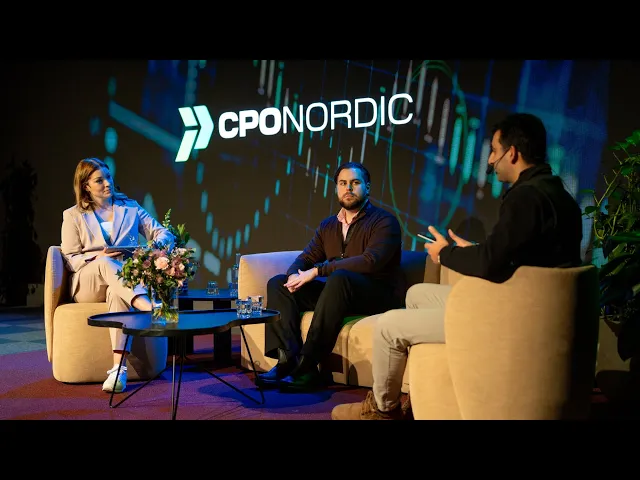
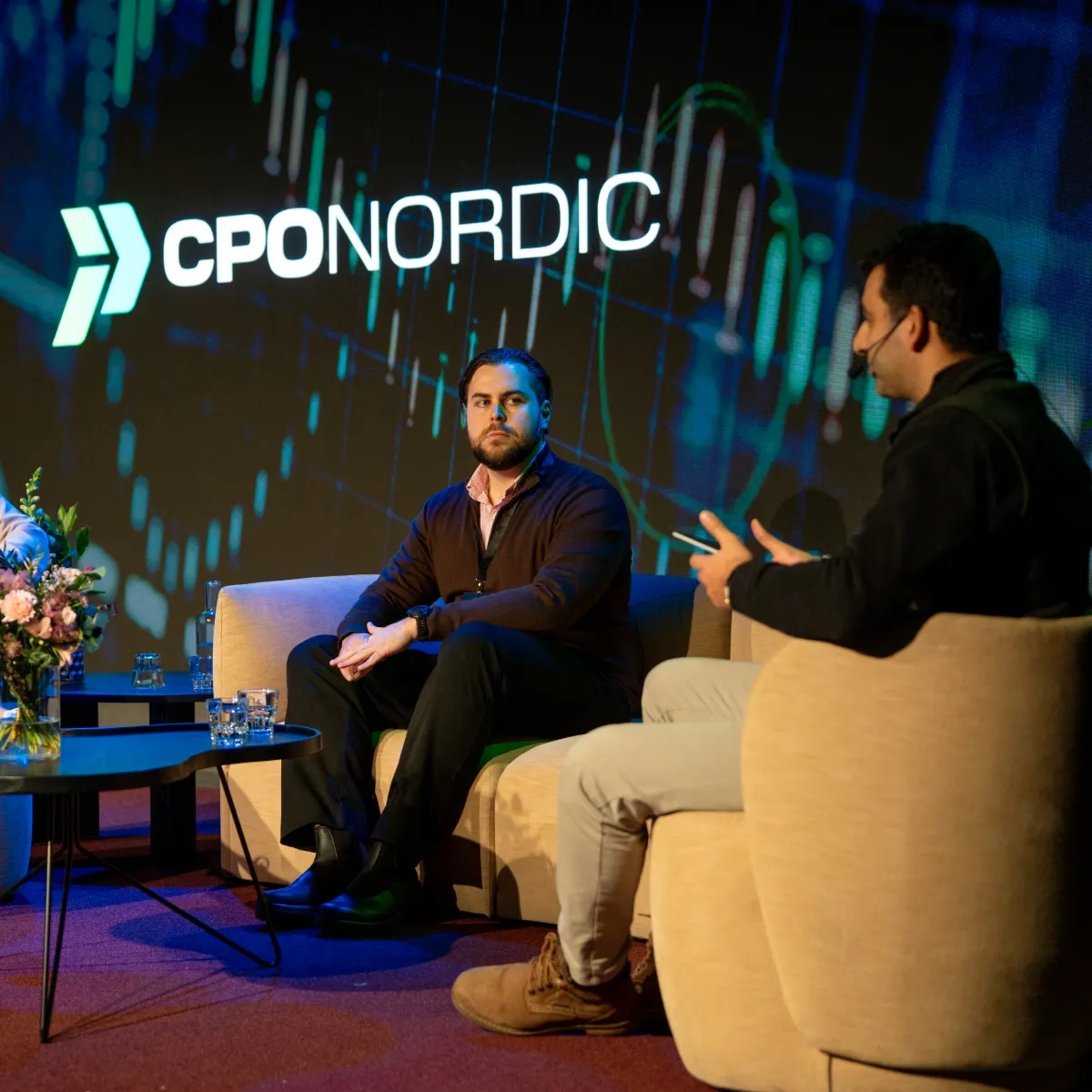
On stage at CPO Nordic, Christopher Hobbs (Indirect Procurement Lead at Voi) spoke with Abhirukt Sapru (Chief Commercial Officer at Omnea) about how Voi rebuilt indirect procurement from a fragmented, greenfield setup into a more proactive, standardized way of buying—across 110 cities and 14 countries.
What makes this story useful isn’t just the end state, it’s how Chris sequenced the change to win credibility first, then scale process and automation without creating bureaucracy. Watch the full discussion here, or keep reading for a summary of the key learnings.
The starting point: fragmented contracts, unclear authority, and renewal risk
Until Chris joined Voi, indirect procurement had not been a priority. The team had a handful of core agreements under control, but the long tail of contracts was scattered across Google Drives in mixed states—signed, unsigned, and hard to validate.
The risk wasn’t only “messy storage.” It was operational and governance exposure:
The team couldn’t confidently map the contract base without signaling to suppliers how limited visibility was.
People had the opportunity to approve and sign agreements without the right authority.
Auto-renewal terms created a silent risk (either because they weren’t negotiated away, or because no one had line of sight on when renewals would trigger).
How Voi sequenced the transformation
Chris described a progression many scale-ups will recognize:
Win credibility with quick savings. With many agreements untouched and the business having grown fast, there was room to deliver meaningful impact and prove procurement’s value.
Introduce structure by starting with the front door: intake. Before tooling, the team asked a simple question: What do we need to know early to run a good sourcing process? That led naturally to an intake form designed to capture the right information upfront—before supplier selection and late-stage urgency locked in outcomes.
Implement tooling that increases adoption instead of friction. The goal wasn’t to create a procurement ticketing system. It was to build an agile process that works at the speed of the business, and gets procurement involved earlier without annoying stakeholders.
The core adaptation: from “make it cheaper” to strategic partner—without becoming a blocker
A key challenge was perception. Procurement was seen as the “make it cheaper function,” and the team had to prove it could do more than price pressure.
That’s why Chris deliberately avoided a heavy process. Instead, intake acted as a simple, lightweight mechanism to:
signal when procurement should be involved (even at budget allocation stages),
clarify what information matters,
and help teams engage earlier—when procurement can still shape demand, scope, and supplier options.
Why Omnea: UX and configurability drive stakeholder engagement
In indirect procurement, you can’t physically stand between a budget holder and the spend. Stakeholders will route around anything that feels painful or slow.
Chris emphasized that user experience is a strategic lever: if the tool is confusing or complex, people stop involving procurement. Voi’s philosophy was simple: “you wouldn’t put customers through a bad experience—so don’t put internal teams through one either.”
Omnea also compared favorably to legacy tools, where change requests often met “no” or expensive custom field work. In contrast, Voi could configure workflows quickly and directly—without developer dependence.
Clean data first, then automation
Chris’s advice for leaders considering AI or automation was direct: you can’t automate without clean data.
Implementing Omnea became a “data discovery” exercise in itself—centralizing and cleaning contract and supplier information so procurement could get to reliable visibility.
From there, automation became practical:
Intake is reviewed and routed with clear logic.
Approvals are assigned based on predefined rules: who should approve, when, and through what path.
Procurement can plan ahead—especially around renewals—rather than being pulled in late.
What changed: proactive work, market enablement, and cross-functional efficiency
With the new approach, Chris described two big shifts:
1) Proactive supplier and renewal management
Rather than reacting late, the team checks in well ahead of renewal dates to assess performance and stakeholder sentiment—more like a lightweight QBR/pulse-check cycle than last-minute renegotiation.
2) From HQ procurement to group procurement
The work expanded beyond HQ into market-level purchasing. Tooling and intake made it easier to standardize how buying happens across geographies—closing the gap between “what HQ thinks is happening” and what’s actually happening in local markets.
Outcomes: visibility, capacity, and a 50x demand-management win
Voi has continued hitting organizational goals even after initial right-sizing and early savings were captured. But the bigger operational benefit is visibility: what used to be a manual effort just to understand targets and initiatives is now readily available.
Beyond procurement, the impact showed up in other teams:
Sustainability & policy: supplier outreach and data collection that used to rely on spreadsheets and emails can now be automated—saving significant time (around “half a role” worth of effort).
Finance: better visibility into financial commitments across countries (like leasing) supports clearer accounting treatment and can positively impact reporting and balance-sheet outcomes.
Capacity repurposing: tooling enabled Chris to shift from an HQ-only focus to supporting markets—without the need for additional local headcount.
And the story that stuck with the audience: a stakeholder requested “unlimited” routing software (and “unlimited” sounded expensive). Because procurement was involved early, Chris had time to shape the requirement and manage demand—resulting in a 50x saving vs the planned budget for that purchase.
As he put it: “if you improve something 10x, you did something smart. If you improve it 100x, you might have stopped doing something stupid. This win landed somewhere in between.”
Interested in learning more? See how Omnea helps teams centralize intake, improve renewal visibility, automate approvals, and unlock cross-functional efficiency.


" height="10.661279999999998px" id="LoeK6pYtS" transform="translate(0.27 5.262)" width="3.3432189999999995px"/><path d="M 7.025 0.035 C 6.902 0.019 6.771 0.012 6.64 0.004 C 4.768 -0.073 3.713 1.036 3.343 1.514 C 3.243 1.645 3.197 1.722 3.197 1.722 L 3.197 0.297 L 0 0.297 L 0 10.958 L 3.197 10.958 L 3.343 10.958 C 3.343 9.872 3.343 8.793 3.343 7.707 C 3.343 7.122 3.343 6.536 3.343 5.951 C 3.343 5.227 3.289 4.456 3.651 3.794 C 3.959 3.239 4.514 2.962 5.138 2.962 C 6.987 2.962 7.025 4.633 7.025 4.788 C 7.025 4.795 7.025 4.803 7.025 4.803 L 7.025 11.004 L 10.369 11.004 L 10.369 4.048 C 10.369 1.668 9.159 0.266 7.025 0.035 Z" fill="rgb(115, 112, 108)" height="11.004105999786248px" id="I8ZK_lI2U" transform="translate(5.631 4.996)" width="10.368549999999999px"/><path d="M 1.941 3.882 C 3.013 3.882 3.882 3.013 3.882 1.941 C 3.882 0.869 3.013 0 1.941 0 C 0.869 0 0 0.869 0 1.941 C 0 3.013 0.869 3.882 1.941 3.882 Z" fill="rgb(115, 112, 108)" height="3.8824500000000315px" id="BoA0OppHn" width="3.882450000000003px"/></g></svg>)
" height="12px" id="Gnx304Rz4" transform="translate(0 2.5)" width="16px"/></svg>)