Blog
Product Updates
The case for autonomous sourcing and why we're building it now
・ 5
min read

Paul Mumford
Director of Product, Sourcing
Enterprise sourcing platforms can be powerful. They can handle complex multi-round RFPs, detailed scoring matrices, e-auctions, and deep category analytics. However, that power comes with weight. Setting up an event takes weeks. Questionnaires are built from scratch or from templates that need specialist knowledge to configure. Suppliers get emailed a link to a platform they’ve never seen and have to create an account to respond. All of this happens outside the workflow.
The result is predictable. Teams only run sourcing events for their largest purchases, where the savings justify the overhead, and it takes 6 months. Everything else goes uncontested: contracts are renewed on existing terms, or directly awarded, and so much indirect spend never faces competitive pressure. The team does what it can with what it’s got.
According to McKinsey, only 30% of companies are actively using e-sourcing tools today, despite evidence they can cut costs by up to 20% in targeted categories. The gap isn’t a lack of appetite. Most procurement teams could tell you exactly which categories they should be sourcing more competitively. The process just means it’s not worth the effort for anything below a certain spend threshold.
The process is the constraint
Procurement leaders want to be running more competitive events, the savings and leverage are there. But I often hear that teams are being asked to “do more with less”. In that environment, a process that takes months of specialist effort doesn’t scale - it’s kept to the purchases where it’s unavoidable.
The question worth asking is why sourcing requires so much effort in the first place.
The answer, almost always, is because it is siloed — manually driven by sourcing experts outside the procurement workflow. A request is made, and then if it’s big enough, someone decides it should go out to RFx. That decision relies on a human. The handover relies on a human. The questionnaire is built by a human. The responses are consolidated by a human. The scoring across every supplier, every form, every response, is done by a human.
When it takes so long, it’s no surprise teams only do it for the biggest purchases. But it means so much value is left on the table: as one CPO said to me recently, “We’re not doing any sourcing on tail spend at the moment. If we could do that, it’s free money.”
What if it wasn’t? What is sourcing was embedded in every procurement workflow, building competitive pressure without the need for expert involvement?
What changes when sourcing is embedded and AI-native
When sourcing is built into the workflow rather than bolted alongside it, the sourcing process can look materially different. Here’s what that means in practice:
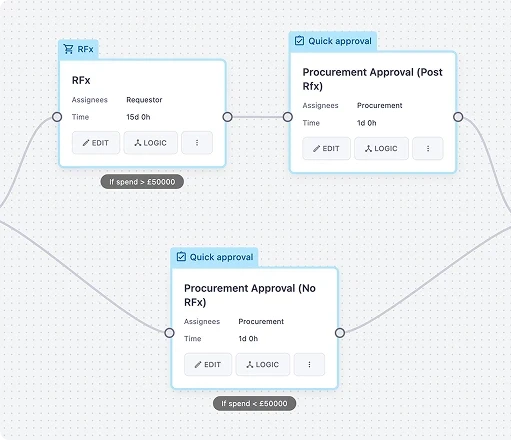
AI triggers the event. RFx events start automatically when a purchase hits a spend or category threshold. There’s no relying on individual buyers to know when to run a competitive process. Tail spend that previously went unmanaged starts getting sourced.
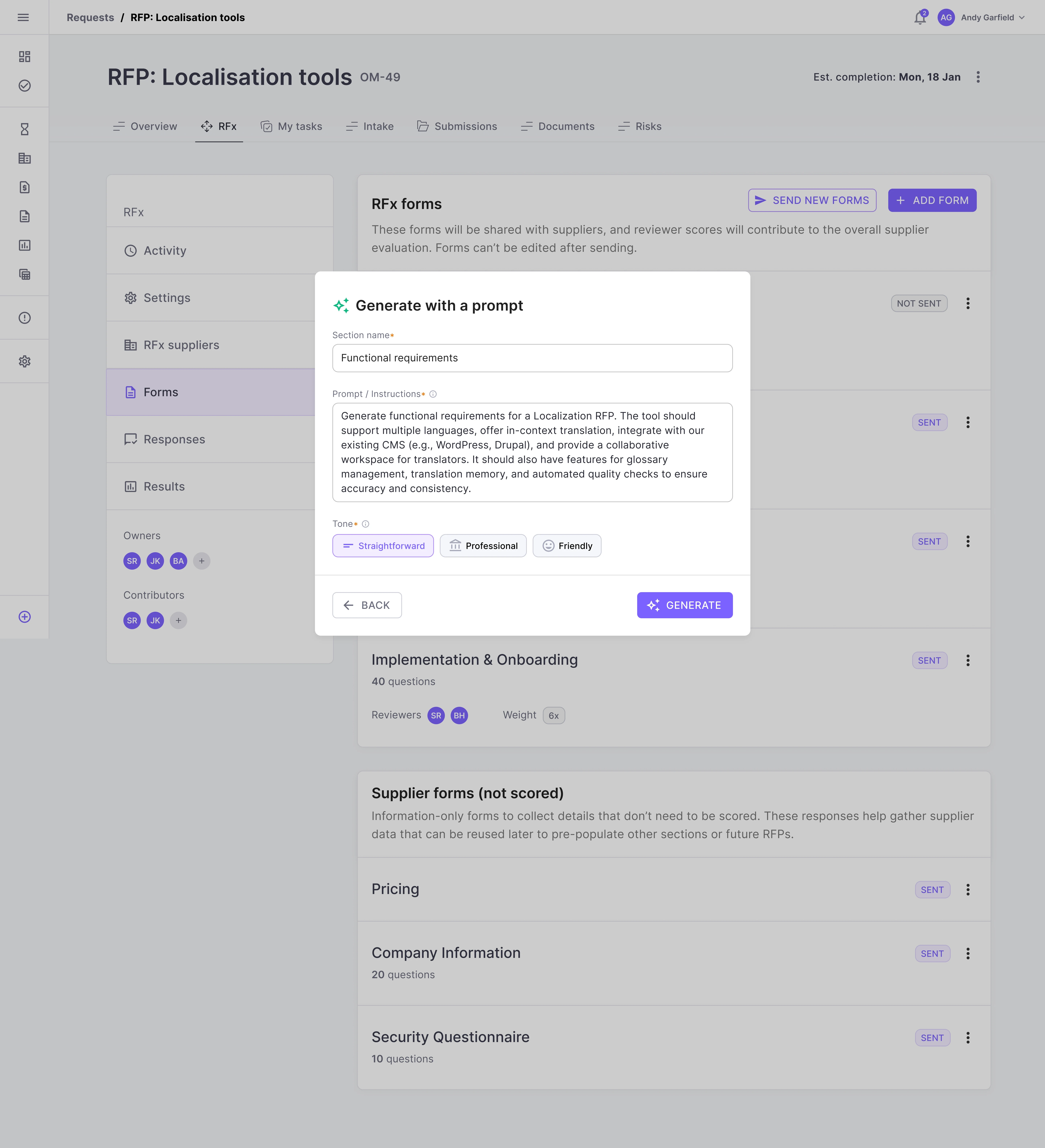
AI builds the questionnaire. Rather than starting from a blank template, buyers describe what they’re sourcing in plain English. Omnea AI generates a structured RFI, RFP, or RFQ — including relevant questions by category, in the company’s tone of voice. Before it goes out, the AI Question Review Agent scans it for gaps, overlapping questions, and leading phrasing, so events are higher quality from the start.
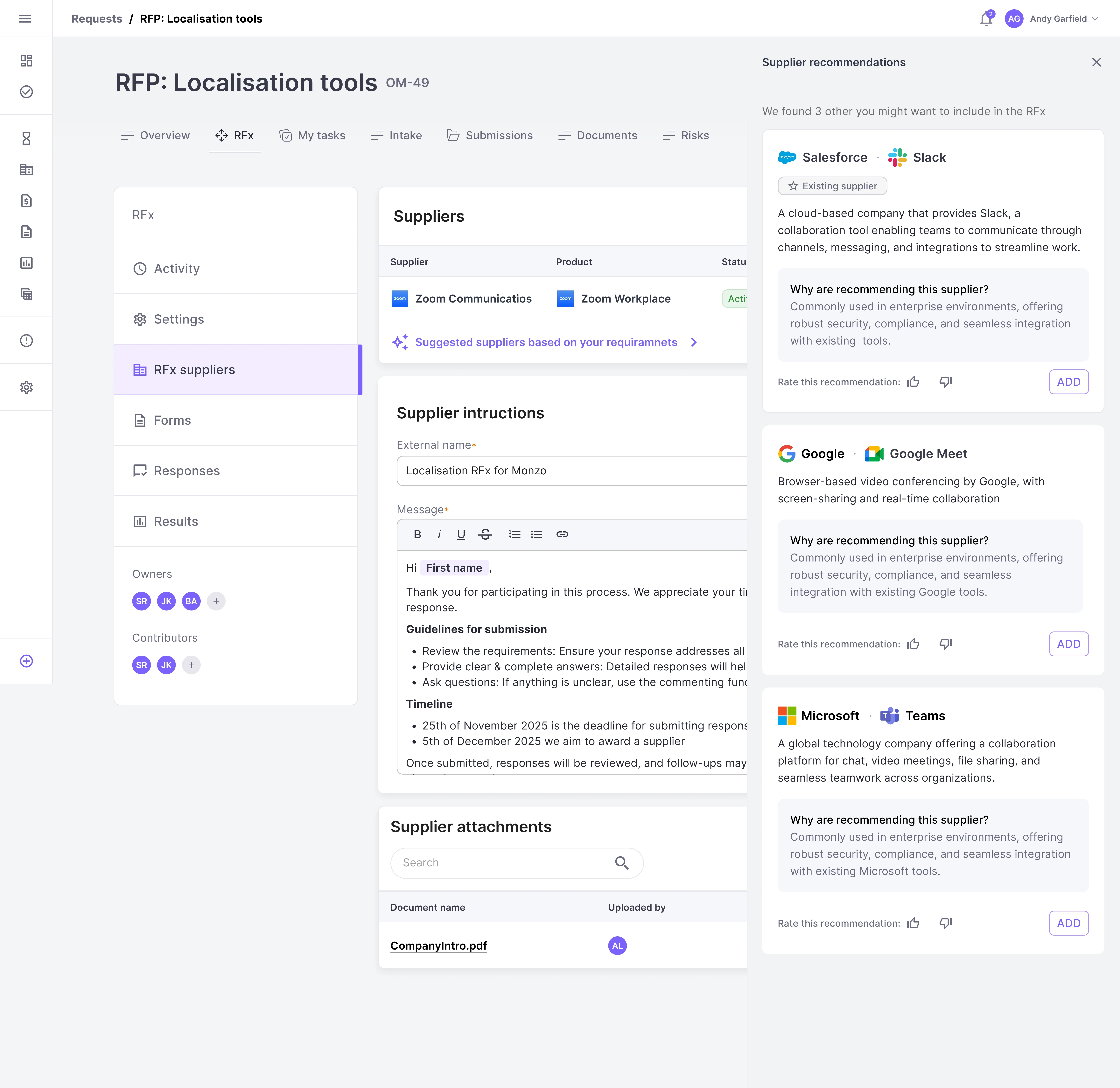
AI suggests suppliers. Rather than going to the same suppliers every time, or just throwing in the market leaders, Omnea AI suggests appropriate suppliers to offer that competition. It suggests existing suppliers who have already been approved for other products in your organisation, as well as new, highly-rated alternatives.
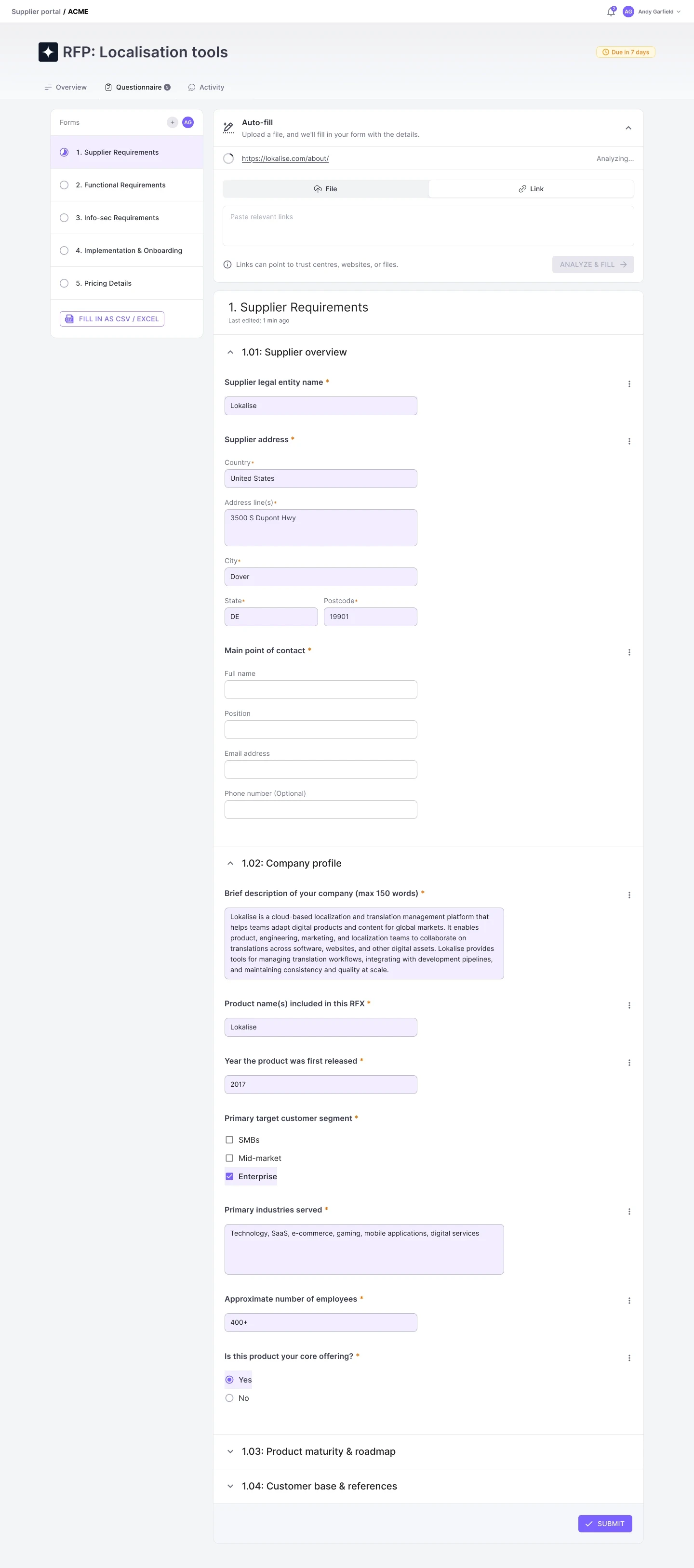
AI fills in supplier responses. Suppliers access the event via a magic link (no account creation required). Omnea AI reviews uploaded documents and trust centre URLs, pre-filling their answers. It even handles complex pricing excels. Everything lands as structured, scoreable data rather than PDFs and spreadsheets that someone has to manually consolidate.
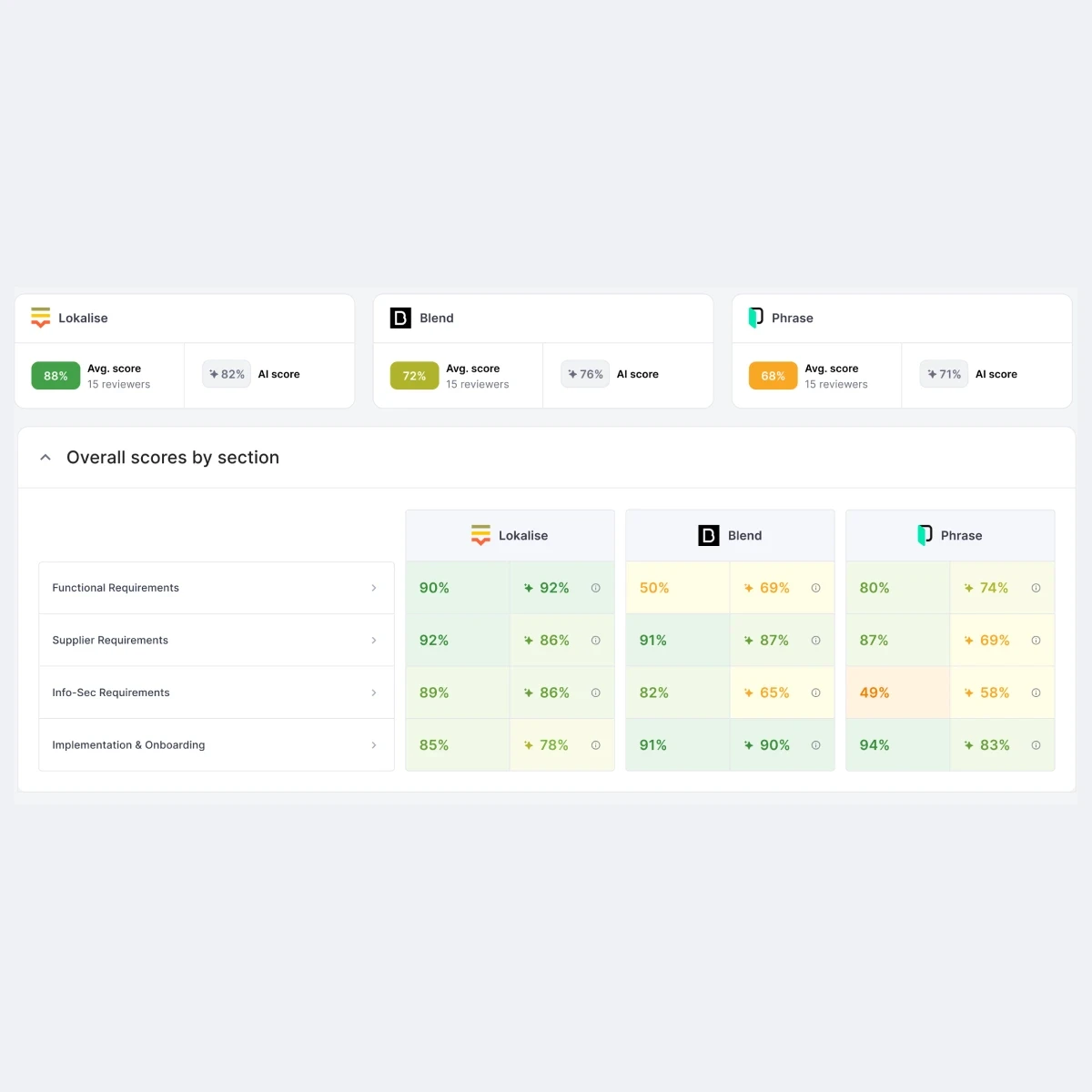
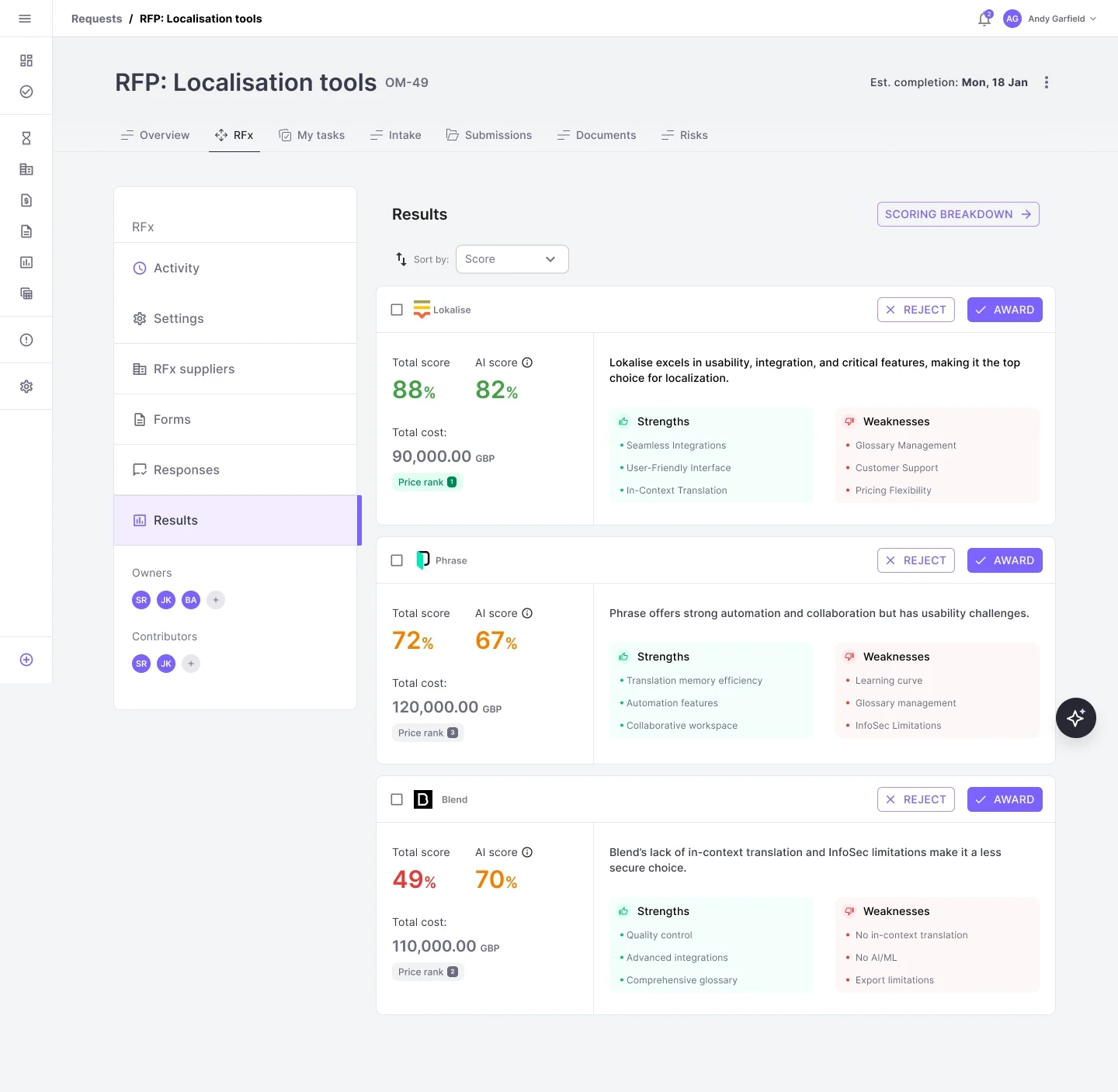
AI scores the responses. Once submissions are in, Omnea AI scores each supplier against the team’s weighted criteria, with confidence indicators flagging where human review is needed. Rather than reading through every response manually, buyers can take a strategic view and only look closely where it matters.
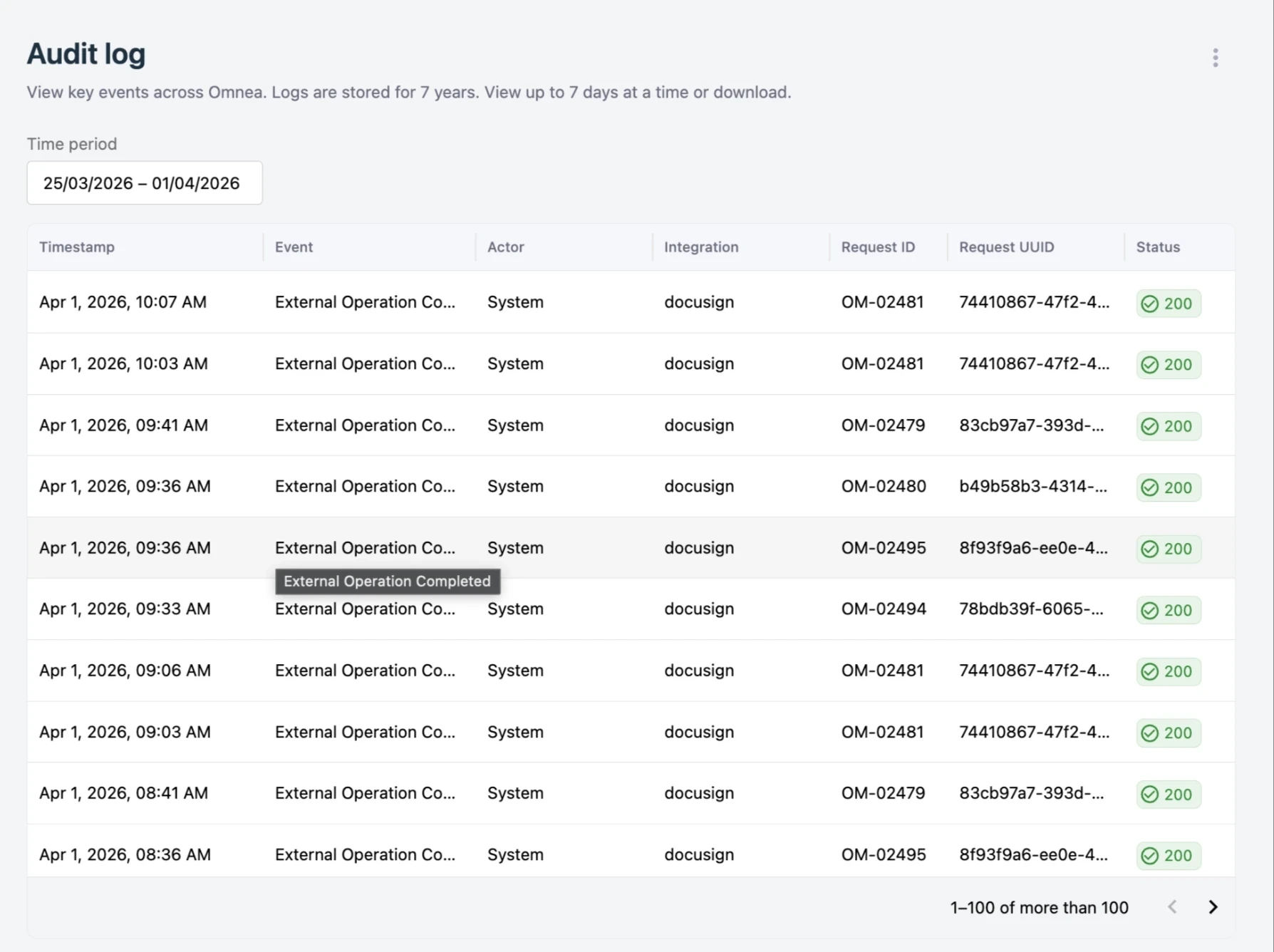
Every decision is auditable end-to-end. From the original purchase request through supplier responses, scoring, and award, the full trail is captured in one place. Critical for a team managing spend across dozens of categories and geographies.
As a result, teams run sourcing events on spend that previously would never have been sourced. Not because they’ve grown the team, but because the process is no longer the reason not to run an event.
Why autonomous sourcing matters and what it actually means
Autonomous sourcing is a term that’s getting thrown around a lot at this point in time. At Omnea, we are specific about what it actually means, because the answer defines how you think about AI’s role in procurement.
Our view, shared by the enterprise customers using Omnea Sourcing today, is that sourcing sits on a spectrum. At one end, there’s tail spend and tactical events: lower-value, lower-risk, high-volume. These are the purchases that currently go uncontested not because nobody cares, but because the overhead isn’t worth it. For this category, AI can already handle the full cycle: triggering the event, building the questionnaire, processing supplier responses, scoring them, and surfacing a recommended award, all with minimal human intervention. That’s close to autonomous, and it’s live today.
At the other end, there are strategic events: large spend, complex supplier relationships, decisions that carry real long-term weight. Here, the goal is not to remove humans from the process. It’s to remove the administrative grind so procurement can focus on the decisions that genuinely require their attention. The human stays in the loop by design.
The teams getting the most out of this are not asking AI to replace procurement judgment. They are using AI to enable that judgment across more spend, in less time, with better data behind each decision.
One of our largest enterprise customers previously worked with a market-leading sourcing platform. They spent years implementing it, had basic templates configured, but almost nobody used it. This was not because the tool lacked features, but because the process was too heavy and too separate from how procurement actually worked. We’re helping them build a process that’s light enough to run at scale.
What happens now?
The sourcing tools built for the last decade were built for a world where running an RFx was a specialist activity requiring specialist skills. That world still exists, but it’s shrinking.
What’s replacing it is sourcing embedded in the workflow, autonomous when the overhead is unjustifiable, and fast enough to run for spend that previously wasn’t worth the effort.
If you want to see what this looks like in practice, we’re hosting a virtual product roundtable on April 14th. Hear from the team building autonomous sourcing at Omnea for customers like Albertsons, The Adecco Group and Spotify, and join your peers to discuss how AI is reshaping what procurement teams can actually do. You can register to join here.


" height="10.661279999999998px" id="LoeK6pYtS" transform="translate(0.27 5.262)" width="3.3432189999999995px"/><path d="M 7.025 0.035 C 6.902 0.019 6.771 0.012 6.64 0.004 C 4.768 -0.073 3.713 1.036 3.343 1.514 C 3.243 1.645 3.197 1.722 3.197 1.722 L 3.197 0.297 L 0 0.297 L 0 10.958 L 3.197 10.958 L 3.343 10.958 C 3.343 9.872 3.343 8.793 3.343 7.707 C 3.343 7.122 3.343 6.536 3.343 5.951 C 3.343 5.227 3.289 4.456 3.651 3.794 C 3.959 3.239 4.514 2.962 5.138 2.962 C 6.987 2.962 7.025 4.633 7.025 4.788 C 7.025 4.795 7.025 4.803 7.025 4.803 L 7.025 11.004 L 10.369 11.004 L 10.369 4.048 C 10.369 1.668 9.159 0.266 7.025 0.035 Z" fill="rgb(115, 112, 108)" height="11.004105999786248px" id="I8ZK_lI2U" transform="translate(5.631 4.996)" width="10.368549999999999px"/><path d="M 1.941 3.882 C 3.013 3.882 3.882 3.013 3.882 1.941 C 3.882 0.869 3.013 0 1.941 0 C 0.869 0 0 0.869 0 1.941 C 0 3.013 0.869 3.882 1.941 3.882 Z" fill="rgb(115, 112, 108)" height="3.8824500000000315px" id="BoA0OppHn" width="3.882450000000003px"/></g></svg>)
" height="12px" id="Gnx304Rz4" transform="translate(0 2.5)" width="16px"/></svg>)